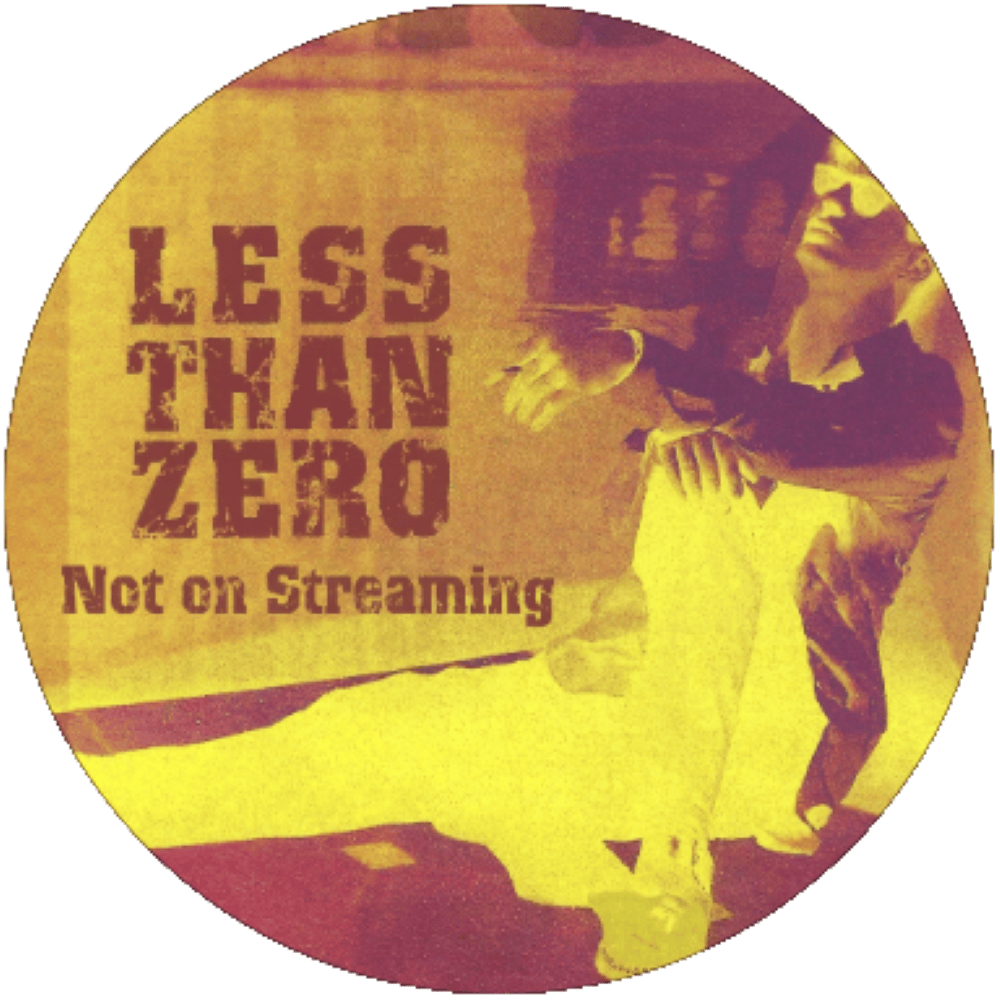
Welcome back to the RetrOasis. Today, we are putting a glossy, bruised, and deeply prophetic 1987 drama onto the slab.
I’m talking about Marek Kanievska’s Less Than Zero (1987), loosely based on Bret Easton Ellis’s groundbreaking 1985 debut novel.
I recently pulled this out of a thrift haul, dusted off the plastic, and sat down for a rewatch. I had trouble even writing a standard review for this one because there is just so much to unpack. I saw it nearly 40 years ago when it first hit theaters, but watching it today? Mind-blowing. It doesn’t hit you over the head with cheap moralizing—it just lays out the cold, hollow wreckage of Reagan-era excess.
It was the right movie at the wrong time. A little too soon, perhaps. But decades later, its power performances push this sanitized studio adaptation into a piece of cinema that remains intensely watchable today.
A Softened Masterpiece of Excess
If you are familiar with Bret Easton Ellis (American Psycho, The Rules of Attraction), you know his world is never a bright, shiny, happy place. His 1985 novel was a famously detached, icy, and episodic look at affluent Los Angeles youth drowning in emotional emptiness.
When 20th Century Fox bought the rights, producers felt the original script draft was too “depressing and degrading” and actively softened the material to make Clay (Andrew McCarthy) a heroic rescuer rather than a passive observer. They turned it into a tragic friendship-and-redemption drama.
Yet, even watered down, the film’s core remains brutal:
- The Downey Ghost: Robert Downey Jr. gives a terrifyingly raw performance as Julian, a charming kid spiraling into a $50,000 crack debt to a cold, predatory dealer named Rip (played with terrifying restraint by James Spader). Downey later admitted that playing Julian became “like the ghost of Christmas future”—a fictional addiction that he tragically came to resemble in the 1990s.
- The Stylized Shell: Cinematographer Edward Lachman shot a neon-drenched, nocturnal Los Angeles that makes the party lifestyle look hypnotic on the surface, while the narrative repeatedly insists that everything beneath it is rotting.
(Side note: Could you imagine if Quentin Tarantino had followed through on the rumors of adapting or remaking this? Watching Tarantino inject his own brand of darkness into Ellis’s semi-autobiographical prose would have been something else entirely.)
The Missing-Streaming Problem: Less Than Zero, Indeed
Here is the real tragedy for a modern audience: if you want to stream this snapshot of 1980s Hollywood darkness tonight, you are completely out of luck.
A quick sweep across major U.S. tracking services like JustWatch reveals zero subscription streaming options and zero digital rental listings.
It’s an incredible paradox. This is a 20th Century Fox title (now sitting in Disney’s massive corporate library) featuring major stars, an R-rated adult profile tailor-made for Hulu, and a legendary, multi-platinum soundtrack produced by Rick Rubin (featuring The Bangles, Public Enemy, LL Cool J, Aerosmith, and Slayer).
While the complex, multi-label music clearance rights remain a highly plausible barrier to a new digital rollout, the official corporate record remains silent. Disney/Fox hasn’t offered a public explanation—the film has simply been left to drift into digital oblivion.
The Verdict
Less Than Zero has suffered the strange fate of a cult classic: remembered through Downey’s tragic brilliance, Spader’s ice-cold menace, and The Bangles’ “Hazy Shade of Winter,” while the actual movie is virtually impossible to stream legally.
It is a film about wealth, consumption, and disposability that has itself become disposable in the digital marketplace. Less than zero, indeed.
If you want to watch this dark, electric time capsule, stop renting permission from the cloud. You’ve gotta find the physical plastic.
Robert Downey Jr. is one of the most recognizable, bankable movie stars on the planet. Bret Easton Ellis remains an enduring literary name. The 1980s nostalgia machine never stops churning out remakes, reboots, and synth-heavy soundtracks.
Yet, if you sit down tonight and want to watch Marek Kanievska’s 1987 neo-noir adaptation of Less Than Zero, the modern streaming ecosystem has a simple answer for you:
You can’t.
The Digital Blackout: By the Numbers
A routine forensic audit across North American digital storefronts and subscription platforms confirms that Less Than Zero is officially stranded:
- Subscription Streaming (SVOD): 0 platforms. (Absent from Netflix, Hulu, Prime Video, Tubi, Criterion, and Peacock.)
- Digital Purchase & Rental (TVOD): Unavailable across the board. Apple TV, Fandango at Home (Vudu), and Google Play yield zero digital rights. Amazon Prime Video marks it with the dreaded banner: “This video is currently unavailable to watch in your location.”
- Current Status: STRANDED / DIGITALLY ORPHANED.
To experience Julian Wells’ heartbreaking, neon-drenched descent into addiction—a performance that many film historians still consider Downey’s most raw and haunting dramatic work—you have exactly two legal choices: hunt down an out-of-print physical copy, or don’t watch it at all.
The Anatomy of an Orphan: How Did This Happen?
When an obscure shot-on-video horror movie vanishes, nobody is surprised. But how does a major studio picture starring Andrew McCarthy, Jami Gertz, James Spader, and an Oscar-winning superstar end up in corporate purgatory?
It boils down to two classic physical-media preservation enemies: merger consolidation and music clearances.
1. The Fox-Disney Vault Trap
Less Than Zero was financed and distributed by 20th Century Fox. Following Disney’s massive acquisition of Fox’s catalog assets, thousands of legacy catalog titles were swept into corporate storage. A gritty, nihilistic, R-rated 1980s drama centered on drug overdose, exploitation, and moral rot doesn’t fit cleanly into a family-friendly corporate brand, and mid-tier catalog restorations rarely get prioritized on corporate spreadsheets.
2. The Multi-Platinum Soundtrack Headache
Produced by Rick Rubin, the Less Than Zero soundtrack is a monumental cross-section of late-80s rock, metal, and hip-hop. The film is wallpapered with legendary cuts:
- The Bangles covering Simon & Garfunkel’s “A Hazy Shade of Winter”
- Slayer’s cover of “In-A-Gadda-Da-Vida”
- Public Enemy’s “Bring the Noise”
- Tracks from Aerosmith, Poison, Roy Orbison, and Glenn Danzig
Back in 1987, contracts for music synchronization routinely lacked perpetual “in all media now known or hereafter devised” language covering digital video-on-demand and worldwide server streaming. To license Less Than Zero today, a rights holder would likely have to renegotiate sync rights across half a dozen major labels and publisher estates—a massive expense for an older catalog title.
The Collector’s Verdict: What to Look For
If you want Less Than Zero in your collection, you’re playing the physical hunting game:
| Format | Release / Label | Collector Notes |
| DVD | 20th Century Fox (2001 / 2004) | Widescreen transfer, long out of print. Holds solid value ($12–$22 used) among physical collectors who know it isn’t online. |
| VHS | CBS/FOX Video (1988) | Classic oversized white CBS/FOX watermark packaging. Look for clean audio—vital for that Rubin-produced soundtrack. |
| Blu-ray | None (Region 1 / US) | Never received a domestic North American Blu-ray release. A few scattered, hard-to-find international imports exist, but no US HD remaster. |
Final Word
Less Than Zero is proof of why RetrOasis exists. The digital streaming model promises that the entire history of cinema is waiting at the press of a button. In reality, corporate mergers and expiring legal contracts wipe crucial chapters of film history off the map every single day.
If you stumble across that 2001 Fox DVD in a thrift store bin or a flea market haul for a buck or two, buy it on the spot. You aren’t just grabbing a movie; you’re preserving an artifact that the cloud decided you shouldn’t have.


Leave a comment