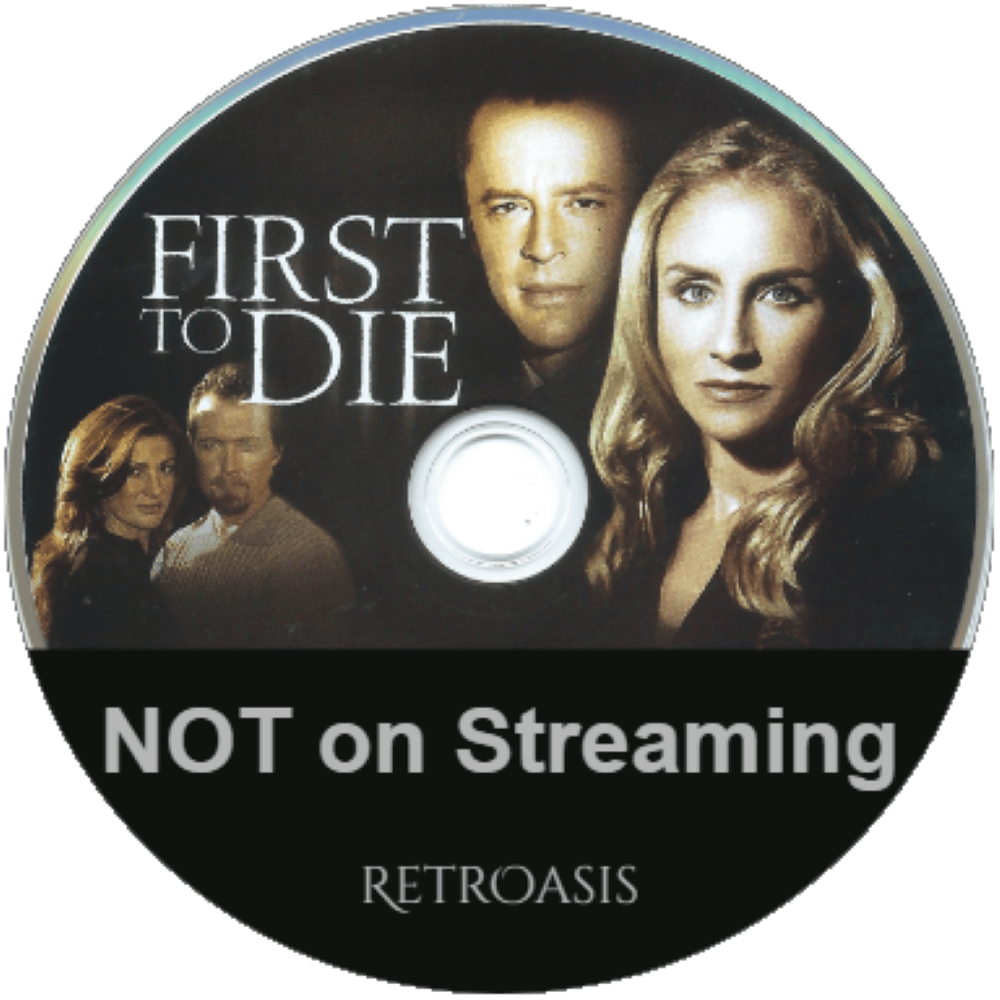
When James Patterson, Russell Mulcahy, and an All-Star Cast Slip Through the Streaming Cracks
Format Audit: DVD (James Patterson’s First to Die)
Original Air Date: February 23, 2003 (NBC)
Streaming Availability: 0 Platforms (Netflix, Peacock, Prime, Hulu, Tubi: Excluded)
Status: Corporate Orphan Work / Catalog Abandonment
The Corporate Orphan: Why Streaming Forgets What It Can’t Be Bothered to Monetize
There is a lazy misconception in modern media commentary that a film has to be “banned,” buried under a bitter lawsuit, or physically destroyed to qualify as an orphan work.
That isn’t how the streaming era actually works.
Most lost media doesn’t vanish in a blaze of courtroom drama; it disappears through corporate apathy. When an intellectual property asset doesn’t promise an immediate eight-figure subscription surge, studios simply don’t bother ingesting it into digital distribution pipelines. The cost to recertify broadcast audio, track down fragmented production rights, and encode high-definition masters for a one-off 2003 television movie doesn’t clear the corporate ROI hurdle.
The result is what we at RetrOasis define as the Corporate Orphan: a major network production with household-name stars and bestselling literary pedigree that is functionally erased from public access simply because the servers refuse to host it.
Exhibit A: NBC’s 2003 adaptation of James Patterson’s First to Die (often cataloged as 1st to Die).
The Production: San Francisco on Paper, Seattle on Screen, Vancouver in the Lens
Broadcast over two nights in February 2003 as a three-hour network event, First to Die was designed as a massive television milestone: the first screen adaptation of James Patterson’s wildly successful Women’s Murder Club book franchise. Directed by genre stylist Russell Mulcahy (Highlander, Razorback) and adapted by television veteran Michael O’Hara (with Patterson himself serving as co-executive producer), the production gave Patterson’s 2001 page-turner the prestige sweeps-week treatment.
Interestingly, the adaptation pulled off a geographic sleight-of-hand: while Patterson’s novel firmly anchored the homicide beat in San Francisco, the telefilm relocated the investigation north to Seattle, while the physical production shot entirely across Vancouver. Modern online databases frequently botch this detail—listing San Francisco because they are reading the novel’s dust jacket—while contemporary broadcast reviews clearly caught the Emerald City switch.
An All-Star Ensemble Cast in a Pre-Peak-TV Time Capsule
What makes the film’s complete streaming absence baffling is the sheer volume of recognizable talent packed into the frame:
- Tracy Pollan takes the lead as homicide detective Lindsay Boxer, juggling a serial murder investigation, a complicated romance, and a personal health crisis.
- Gil Bellows (Ally McBeal, The Shawshank Redemption) co-stars as Chris Raleigh, Boxer’s partner and love interest.
- The “Club”: Rather than a solitary cop procedural, the narrative builds its informal investigative core by teaming Boxer with Pam Grier as medical examiner Claire Washburn, Megan Gallagher as ADA Jill Barnhart, and Carly Pope as crime reporter Cindy Thomas.
- The Suspects & Support: Robert Patrick (Terminator 2) chews the scenery as the primary suspect, best-selling novelist Nicholas Jenks; Angie Everhart and Sean Young play his current and former wives; with Mitch Pileggi (The X-Files) and Byron Mann rounding out the precinct.
RetrOasis Review: Stiff Melodrama, Great Villain, Perfect Rainy Afternoon Mystery
Look, nobody is going to mistake First to Die for high cinematic art. The dialogue can feel distinctly stiff, and it wears its early-2000s network-TV pedigree openly. It moves with that familiar, slightly melodramatic sweeps-week rhythm, leaning heavily into soap-opera relationship beats alongside grizzly wedding-night homicides.
Yet as an early-2000s time capsule, it flat-out works as a cozy, twisty mystery.
Robert Patrick is an absolute standout. Patrick knows exactly what kind of movie he’s in, delivering a calculating, genuinely unsettling performance that keeps the viewer second-guessing the narrative right through its final act. The group dynamics between Pollan, Grier, Gallagher, and Pope give the procedural a distinct flavor that predated the short-lived 2007 ABC Women’s Murder Club weekly series.
Is it cheesy at times? Unquestionably. But with an intricate web of suspects, solid Vancouver neo-noir cinematography, and Patrick playing a top-tier villain, it is an exceptionally fun way to kill an afternoon on a rainy weekend.
The Physical Verdict
Try to find First to Die in 2026 on Peacock (NBC’s own streaming service), Netflix, Prime Video, or ad-supported hubs like Tubi, and you will hit a complete zero.
Because the digital pipelines abandoned it, physical media remains the sole vehicle keeping this adaptation alive. The film saw home-video life on DVD under the title James Patterson’s First to Die, preserving the full miniseries cut. These secondhand copies drift through thrift bins, garage sales, and eBay listings for a few dollars.
You don’t need a national controversy or a legal injunction to erase screen history—all it takes is an automated corporate catalog choosing not to click “upload.” Keep your eyes peeled for the DVD in the wild; your home shelf remains the only permanent streaming service.


Leave a Reply