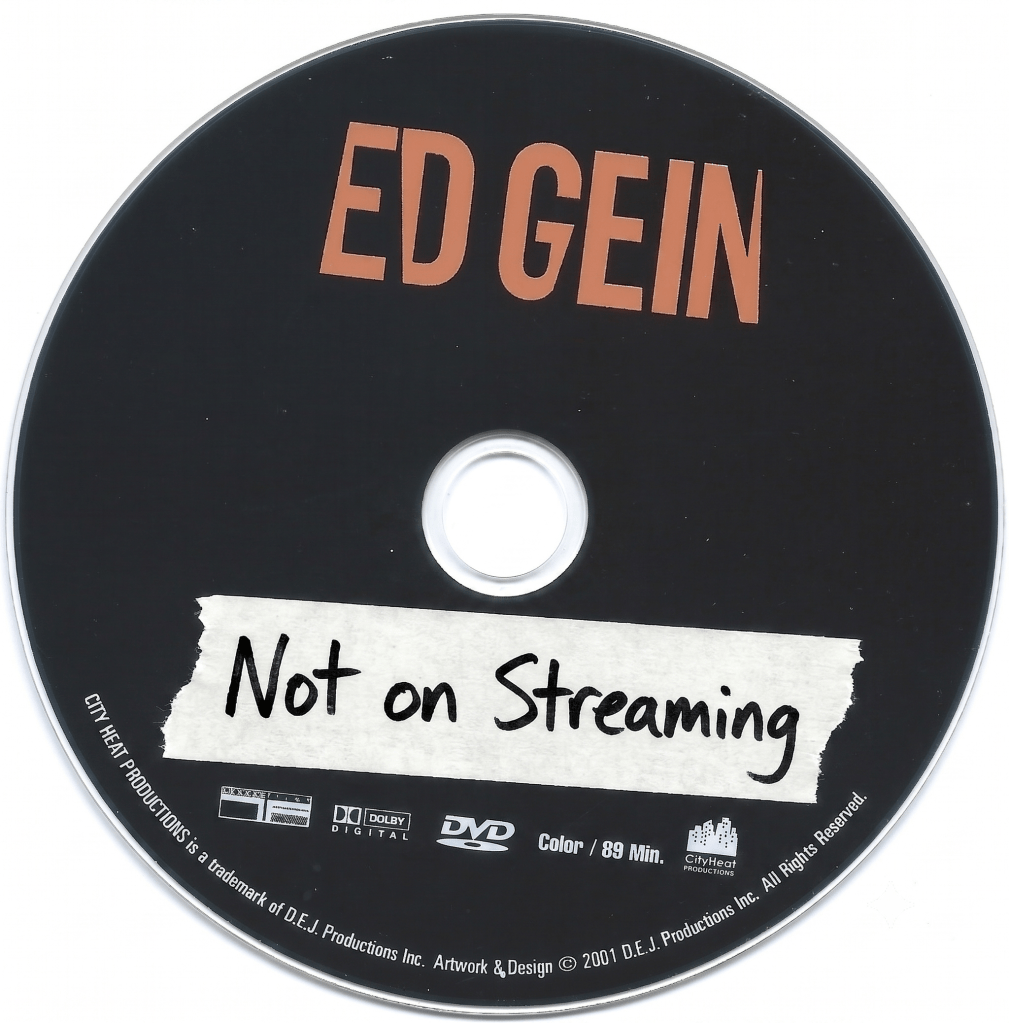
Welcome back to the RetrOasis. Today, we are laying a dark, quiet, and deeply misunderstood entry from the turn of the century onto the slab.
I’m talking about Chuck Parello’s Ed Gein (2000) (also released internationally under the title In the Light of the Moon).
For decades, three of my absolute favorite movies—films I have watched countless times—have dominated my personal viewing history: Alfred Hitchcock’s Psycho (1960), Tobe Hooper’s The Texas Chain Saw Massacre (1974), and Jonathan Demme’s The Silence of the Lambs (1991).
I always knew, from the very first time I sat down with them, that Norman Bates, Leatherface, and Buffalo Bill were all loosely—and sometimes directly—born from the real-life crimes of Plainfield, Wisconsin’s own Edward Gein. But for years, I actively avoided diving deep into the real-life history. The actual mud and grit felt like something best left unmined. When this 2000 indie DVD hit rental shelves, I passed it by again and again, assuming it was just another cheap, lurid gorefest trying to ride the coattails of the legends it inspired.
I was completely wrong.
The Setup: B-Movie Makeup, A+ Character Study
The film opens with a grainy, black-and-white, newsreel-style intro that immediately locks you into the bleak, isolated atmosphere of 1950s rural Wisconsin.
What makes the movie work isn’t splatter—it’s Steve Railsback.
If you’ve seen Railsback play Charles Manson in Helter Skelter (1976), you know he can chew scenery with high-voltage, manic intensity. But here, under Chuck Parello’s restrained direction, Railsback does a complete 180. He plays Gein as shy, soft-spoken, sheepish, and painfully awkward. To his neighbors, Eddie wasn’t a monster; he was just the harmless neighborhood bachelor who did odd jobs and babysat local kids.
That meekness is precisely what makes him so terrifying—and it’s why he got away with it for so long. There’s a scene where local boys drop by his house, and the town attitude is summarized in a single line: “He doesn’t mean any harm.”
Psychological Rot vs. Lurid Gore
Instead of a mindless slasher, writer Stephen Johnston and director Chuck Parello crafted a subtle, claustrophobic psychological study of maternal domination and grief.
- The Augusta Factor: Carrie Snodgress gives an intensely terrifying performance as Augusta Gein. Her presence hovers over the entire film like a poison, manifesting in hallucinatory flashbacks on an old black-and-white TV set. The pig slaughter scene with Snodgress sets the tone for the religious and psychological abuse that shattered Gein’s mind.
- Minimalist Disturbances: The film manages to be deeply disturbing without being exploitative. The sequence where Ed tries on prosthetic noses has a bizarre, twisted humor to it, while the moment he dances in a suit of skin is executed with a minimalist simplicity that hits harder than any $100 million CGI effect.
The Legal Mirage: The “Innocent” Cannibal
When police raided Gein’s farmhouse in November 1957, the legal system ground to a halt. Gein was initially found mentally unfit to stand trial and spent over a decade in an asylum. When he was finally tried in 1968, the judge found him guilty of murder—but immediately ruled him legally insane at the time of the crime.
In the eyes of the law, the man who inspired the greatest horrors in American cinema was technically acquitted of criminal responsibility due to insanity. He lived out his days in a mental facility until 1984.
That legal paradox makes his final line in the 2000 film an absolute, instant classic. Looking around the hospital, Eddie sheepishly observes: “Some of the people here are pretty disturbed.”
The Streaming Void: The Digital Ghost
Why is this movie a resident of the RetrOasis? Because like so many niche catalog titles, its digital existence is an unstable mess.
Depending on where you look, aggregator services give conflicting reports—Plex lists “no locations,” JustWatch often flags it as out-of-stock or rental-only, and platforms alternate between obscure streams and complete regional removal. It behaves less like a permanent catalog staple and more like a digital ghost.
Because it was marketed as a cheap gore flick rather than the dry, atmospheric character study it actually is, it never built the mainstream streaming momentum to stay permanently licensed.
The Verdict: B+
Ed Gein (2000) is a strange, quiet, and remarkably restrained curiosity. It trades sensationalism for psychological misery, anchored by a masterful, inverted performance by Steve Railsback.
If you want to see how the real-life ghost behind Psycho and The Texas Chain Saw Massacre lived before Hollywood turned his darkness into popcorn entertainment, you’ll need to dust off the physical disc player.
Keep your physical media safe, protect your discs, and keep the history alive.
Question for the comments: Ed Gein was still alive in a Wisconsin hospital when both Psycho (1960) and The Texas Chain Saw Massacre (1974) were released in theaters. Do you think he ever realized he was watching his own shattered reality on screen? Let’s talk in the comments!
 Good, Great or Excellent?
Leave a comment