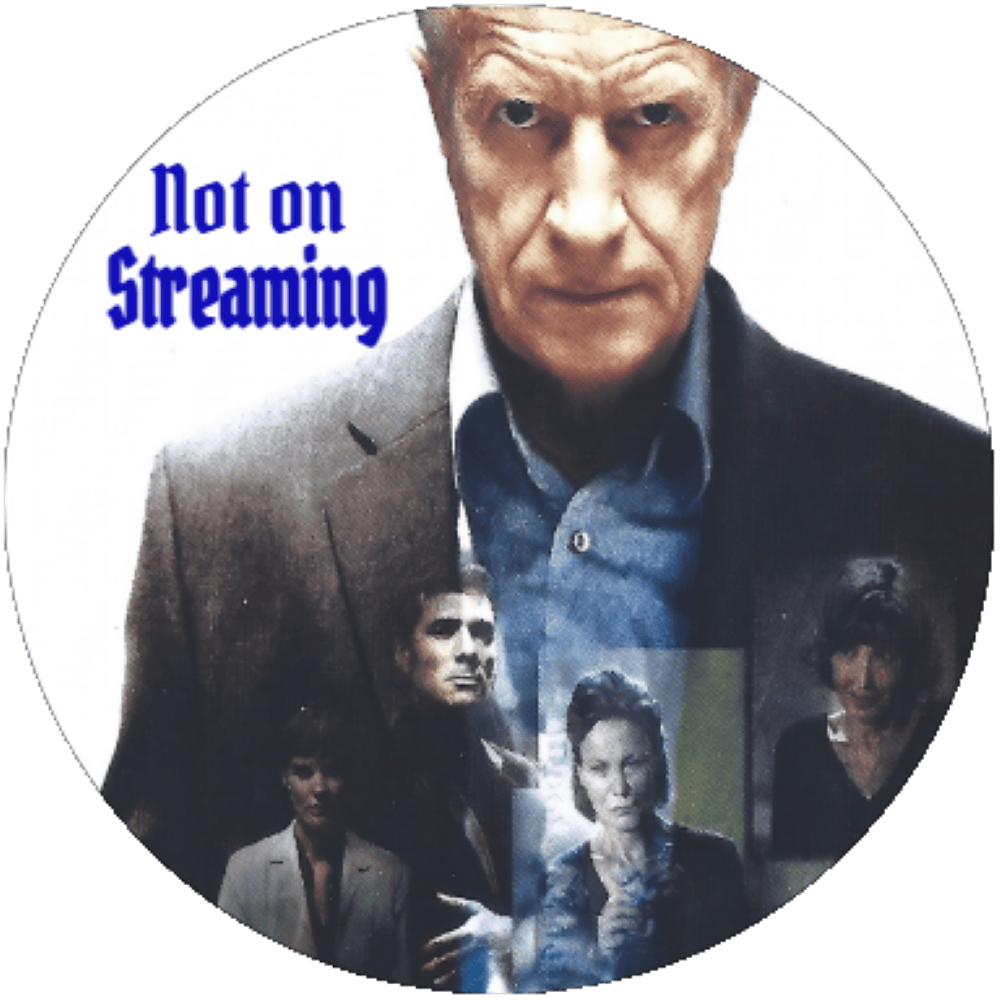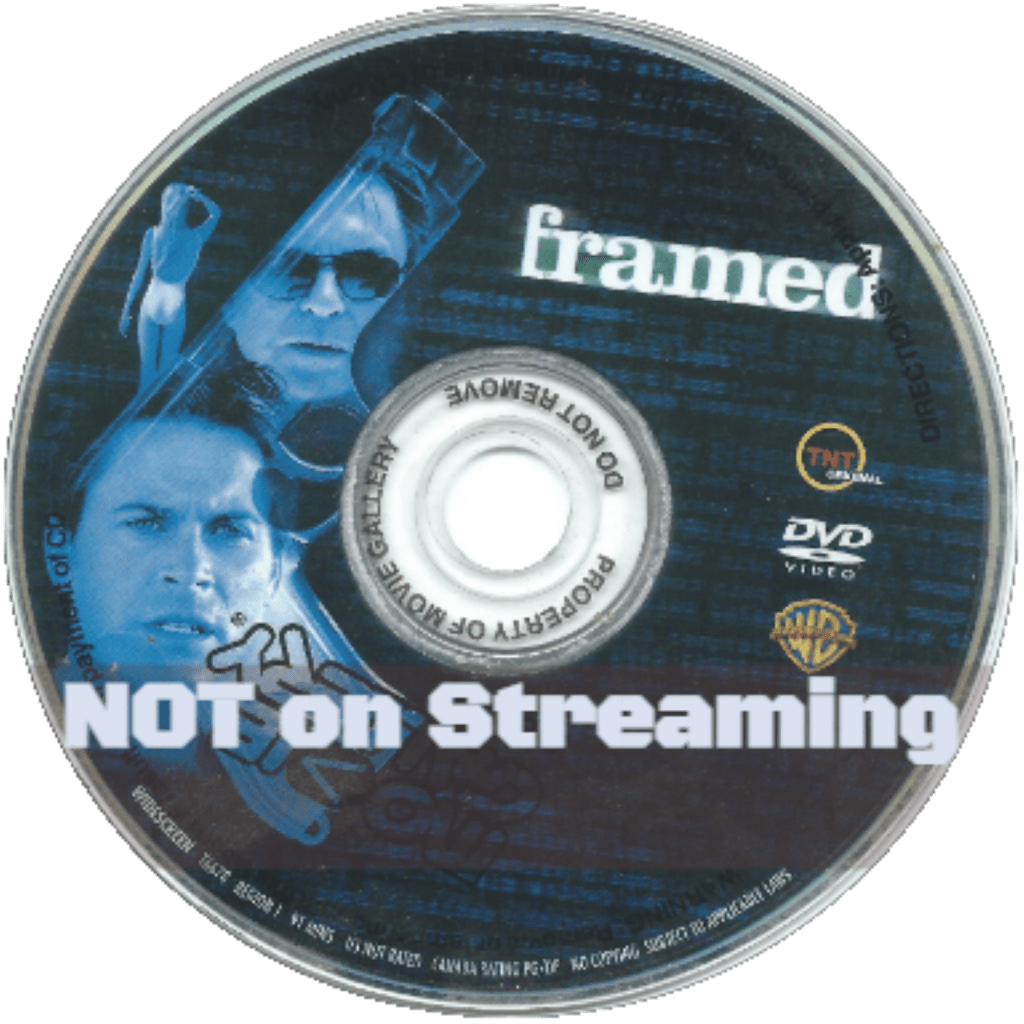
• Welcome back to the RetrOasis. Today, we are cracking open a case file from the year 2002—a time when premium basic cable was the undisputed king of the mid-budget, star-studded suspense flick. We’re spinning a forgotten TNT original called “Framed”.

    I’ll be honest going into this one: I half-expected a generic, paint-by-numbers procedural. But by the time the credits rolled, I was far more into this tight little thriller than I ever thought I’d be. It’s an incredibly solid, performance-driven cat-and-mouse game that absolutely deserves a bigger audience.

    Yet, if you pull up your modern streaming apps and type in the title, you’re going to get a whole lot of nothing. Framed has been completely ignored by the mainstream(s). It’s a ghost in the digital machine, meaning your only ticket to this interrogation room is tracking down the physical plastic.

    The Setup: What’s the Title Even Mean?

    The movie kicks off on vacation, where New York detective Mike Santini—played by Rob Lowe—accidentally spots a high-profile, slippery money-laundering fugitive named Eddie Meyers, played by the brilliant Sam Neill.

    Lowe plays the straight-arrow family-man cop, a role that frankly helped rescue him from a bit of career obscurity in the early 2000s thanks to TNT’s steady paycheck. Neill, on the other hand, plays an absolutely fantastic “bad guy.” His character is a master manipulator, one of those hyper-intelligent criminals who is constantly working every single person in the room.

    Santini manages to pull off a big bust, but right on cue, the FBI swoops in to take over the case—just like they do in every single movie of this genre. But there’s a catch: Meyers refuses to talk to anyone except the detective who brought him in.

    Tight Pacing, Sharp Dialogue, and a Clever Card Trick

    Once the movie locks Lowe and Neill into a confined interrogation room, it transforms into a very odd, morally loaded buddy picture. Yes, it’s a “real talky” movie, which is almost certainly a budgetary constraint of early-2000s television filmmaking. But because the dialogue is so sharp and the performance chemistry is so electric, the tight space works to the movie’s advantage.

    • The Highlights: There’s an incredibly clever credit card trick used early on that really sets the tone for how smart the writing can be.
    • The Atmosphere: The production values are surprisingly excellent. While most TV movies look flat, director Daniel Petrie Jr. uses cinematography to make a Winnipeg-standing-in-for-New-York grid and a Bahamian vacation look genuinely expansive and polished.
    • The Wife: Alicia Coppola plays Santini’s fed-up wife, Lucy. She does an excellent job portraying the reality of being married to a cop who can’t leave the job at the office. Honestly? My only major complaint is that I wish she was in the movie more.

    By the end of the twist-driven narrative, you’re left guessing who is truly pulling the strings, which begs the ultimate question: What is the title actually referring to? Is it Neill’s character being set up, or is Lowe’s character being drawn into a trap?

    Why It’s a RetrOasis Resident

    • The Trivia Blackout: In a truly bizarre twist for a film starring household names like Rob Lowe and Sam Neill, the IMDb trivia section for Framed is completely empty. There is virtually zero documented behind-the-scenes lore online, adding to its deep-cut obscurity.
    • The Lost Identity: Because the word “Framed” has been used for about fifty different crime dramas, noirs, and TV projects over the decades, this specific 2002 gem completely slipped under the radar.
    • The Verdict: I give it a very enthusiastic B. It doesn’t reinvent the wheel, but it delivers exactly what a great, lean psychological thriller should. It’s a professional, well-paced, and gripping duel between two masters of their craft.

    If you find a copy of this forgotten TNT original at a yard sale or a flea market, don’t hesitate. Grab it, dust off the DVD player, and enjoy a style of filmmaking that Hollywood just doesn’t make anymore.

    Why do you think the major networks stopped making these smart, dialogue-heavy TV movies? Is everything forced to be an 8-part miniseries now? Let’s talk about it in the comments!

    #RetrOasis #Framed2002 #RobLowe #SamNeill #PhysicalMedia #NotOnStreaming #CableThrillers #ForgottenCinema

  • Welcome back to the RetrOasis. Today, we are strapping on our six-shooters and diving into a subgenre that I genuinely want to love: the Horror-Western.

    The problem? I can’t think of a single, genuinely good one I’ve ever seen. And after spinning the rare DVD for today’s flick—2006’s “After Sundown” (sometimes mistaken as After Sunset)—I’m a little sad to report that my search for that elusive masterpiece continues.

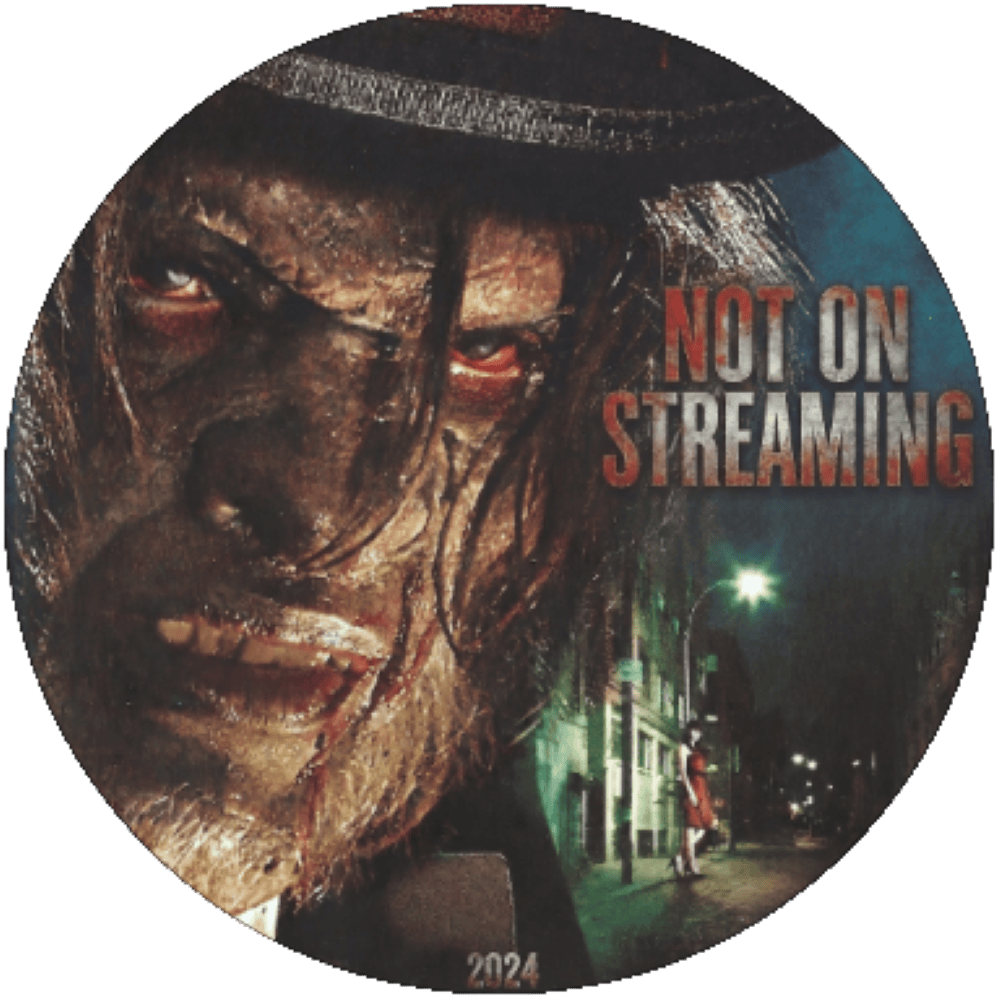
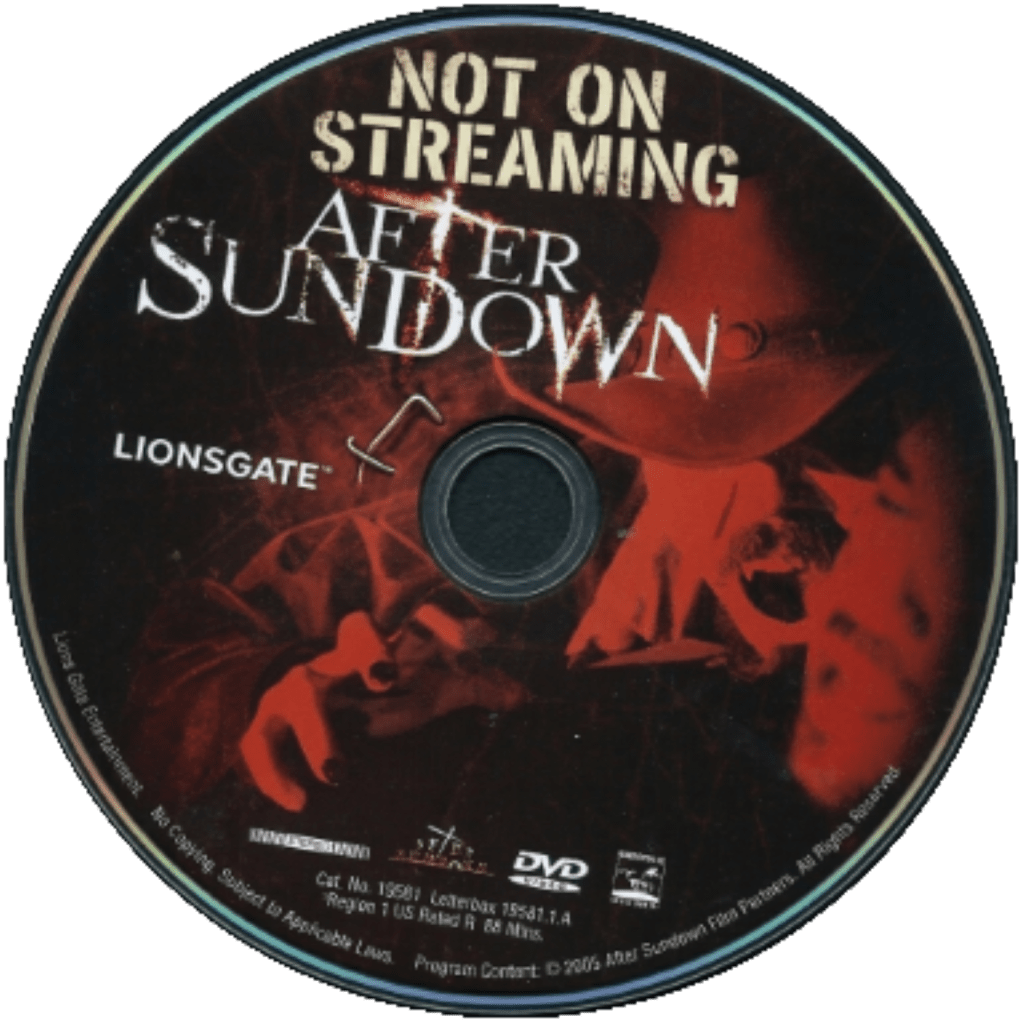
    But check out that custom disc art up top. Lionsgate gave it a great domestic release back in the mid-2000s, and it looks beautiful on a physical shelf. Yet, if you peer closely at the top of that plastic, you’ll see our signature truth stamped right onto it: NOT ON STREAMING. The digital landscape has completely buried this Texas indie, making physical media the only way to ride this weird range.

    The Setup: Rock Gulch, Texas meets the Undead

    The premise here is wildly ambitious. It kicks off with a pure, classic 19th-century Horror-Western opening, but right after the credits roll, it yanks you into modern times. A crew is relocating an old cemetery in the town of Rock Gulch, Texas, and unearths a perfectly preserved corpse of a woman with a wooden stake through her heart.

    Naturally, they pull the stake out.

    She wakes up, and her resurrection signals her undead cowboy-vampire husband to come track her down. The twist? He doesn’t just drink blood—he unleashes a wave of mindless zombies to act as his personal minion army. Is it a demon movie? A vampire movie? A zombie movie? For the first half, it’s hard to tell. There’s even a hilarious low-budget car chase scene where you hear tires squealing dramatically… while the car is clearly spinning out on patches of soft lawn grass.

    Eventually, a flashback sequence told through an old journal explains the rules: a cowboy vampire who can control the local zombie population. Okay, now I get it.

    The $20,000 Canon Battleground

    Directed by Christopher Abram and Michael W. Brown, After Sundown is a textbook definition of determined, micro-budget indie filmmaking. It was shot around Fort Worth, Texas, for a measly $20,000 using a single Canon digital video camera.

    When you’re working with that kind of lunch money, things go wrong. The production faced a brutal schedule, lost locations, and actors walking off the set mid-shoot, forcing massive rewrites on the fly. Rumor has it the two directors had massive creative clashes over the tone. Co-director Brown’s version—which cut down a lot of the explicit horror elements in favor of a convoluted, action-heavy ending—is the one that officially made it onto the disc. The acting? Let’s call it a solid D-.

    Why It’s a RetrOasis Resident

    • The Minion Mashup: While the execution is rough, fusing vampire and zombie lore into a Western siege scenario (heavily nodding to Night of the Living Dead) is a genuinely original concept.
    • The Bootleg Legend: Only one official cut was authorized for the Lionsgate DVD, but whispers of unauthorized, bloodier alternate cuts have circulated in deep-cut horror forums for years.
    • The Verdict: I always try to say something good about every movie that stops by the RetrOasis. In this department, the historical flashback scenes are actually pretty cool and hold a lot of atmospheric promise. If the writing had been tighter and the narrative more cohesive, this genuinely could have been the holy grail Horror-Western I’ve been hunting for.

    Instead, it’s an ambitious, flawed, highly eccentric piece of Texas indie history. It didn’t lasso the moon, but it’s a fun, zero-budget artifact worth watching just to see an undead cowboy lead a zombie army through modern Texas. Track down the DVD, dust off the player, and see it for yourself!

    Do you know of a truly great Horror-Western that I’ve missed, or is this subgenre just cursed to stay in the low-budget wilderness? Hit me up in the comments!

    #RetrOasis #AfterSundown #HorrorWestern #IndieHorror #PhysicalMedia #NotOnStreaming #Zombies #Vampires

  • Welcome back to the RetrOasis. Today, we are putting a massive, clunky, 1990 experiment on the slab. A movie I walked away from completely disappointed thirty-six years ago, and after a fresh rewatch on the physical player… yep. Same reaction.

    I’m talking about Roger Corman’s “Frankenstein Unbound” (1990).

    Look, the graphic above tells you everything you need to know about the current digital landscape before we even dive in. That stitched-together, bloodshot eyeball represents the exact state of modern corporate cinema preservation: NOT ON STREAMING. The algorithms have completely ghosted this movie, forcing us to hunt down the physical media just to witness this beautiful disaster.

    And man, it is a tragedy of squandered potential. It has so much going for it on paper. You’ve got a legendary concept based on Brian Aldiss’s brilliant 1973 sci-fi novel. You’ve got the absolute king of independent cinema, Roger Corman, returning to the director’s chair for the first time in twenty years with a rumored $1 million payday and an $11.5 million budget—a fortune for a guy who used to make movies for the price of a used sedan.

    The backers probably thought they were buying a sleek, modern Hollywood studio blockbuster. Instead, Corman gave them the world’s most expensive B-movie.

    The Setup: High Concept meets a Talking Laser Car

    The story kicks off in the year 2031. Dr. Joe Buchanan (John Hurt) has developed an ultra-powerful, “humane” weapon that cleanly disintegrates targets. Instead of saving the world, the device weaponizes physics, fractures space-time, and creates massive “time slides.”

    Before he knows it, Buchanan is pulled right back to 1817 Switzerland—along with his high-tech, talking, laser-equipped computer car.

    Once he hits the 19th-century dirt, the movie goes full meta-melodrama. Buchanan runs into the actual Mary Shelley (Bridget Fonda) before she writes her masterpiece, and then bumps into the actual, living Dr. Victor Frankenstein (Raul Julia). It treats the Frankenstein story as both literary history and a living event happening simultaneously.

    What Actually Works: The Monster

    Let’s give credit where it’s due. The design of the Frankenstein monster in this film is absolutely spectacular. It is grotesque, creepy, and deeply accurate to the stitched-together nightmare described in Mary Shelley’s original text. It’s easily one of the best visual representations of the creature ever put on celluoid.

    You also have powerhouse actors like John Hurt and Raul Julia completely chewing the period-accurate scenery. They try. They really do. But their gravity is constantly fighting a losing battle against tacky blue-screen special effects, plastic sets, and some incredibly hokey dialogue.

    The Peak 90s AI Comedy Gold

    Which brings me to my favorite part of the entire trainwreck. At one point, the futuristic car computer scans the gothic surroundings, analyzes the local lore, and explicitly states that Mary Shelley’s 1818 horror novel is “a story about artificial intelligence.”

    You have to love it. It is such a sterile, tech-bro, Silicon Valley take on a gothic masterpiece. It completely strips away the soul, the lightning, and the graveyard dirt of the creature and replaces it with a firmware update. Honestly, that one line summarizes the entire problem with the film: it’s a weird, confused mixture of sci-fi tech and romantic literature that never quite finds its rhythm. It is interesting as a historical curiosity, but it is completely uncompelling as a narrative film.

    Why It’s a RetrOasis Resident

    • The Final Bow: This stands as Roger Corman’s final directed feature film. While it lacks the tight, effective “schlock” energy of his 1960s Edgar Allan Poe cycle, it remains a fascinating, bizarre detour in his historic career.
    • The Streaming Void: As of May 2026, Frankenstein Unbound is completely AWOL on the big streaming apps. Between music clearance issues and its niche cult status, the corporate vaults have locked it away. If you want to see Raul Julia argue ethics with a creature in a waistcoat while a laser-car idles in the background, you’re hunting for the DVD or the rare laserdisc.
    • The Verdict: It stays a solid D+. The sheer amount of wasted potential is what kills you. Every time I watch it, I see the ghost of the classic movie it should have been.

    Thirty-six years later, I still wonder if a truly captivating cinematic look at this exact “science gone wrong” mashup is in our future. Maybe we’re due for a Frankenstein Unbound II. Until then, protect your physical media, dust off your players, and keep the history alive.

    Do you think Mary Shelley’s monster counts as the first warning about Artificial Intelligence, or did the car computer completely miss the point? Let’s fight it out in the comments!

    #RetrOasis #FrankensteinUnbound #RogerCorman #RaulJulia #JohnHurt #PhysicalMedia #OrphanWorks #NotOnStreaming

  • Welcome back to the RetrOasis. Today, we are hitting the pavement on a near-deserted highway with a 2003 psychological road-horror trip that goes by two names: “Pulse” in the US, and “Octane” internationally.

    Let’s lay my cards on the table: I love Madeleine Stowe. This movie catches her right at her peak acting era. On top of that, I am a massive The Walking Dead fan, and I have an absolute fascination with movies and TV shows about cults and the weird, terrifying control they exert over their followers. So, finding this rare disc had me primed and excited for a quirky, nightmarish road picture.

    The reality? Well… let’s just say I might have been brainwashed by a cult halfway through, because 24 hours later, the plot completely evaporated from my brain.

    The Setup: Goths, Gas Stations, and Gore Subtext

    The movie follows Senga Wilson (Stowe), a divorced mother driving overnight down a desolate highway with her rebellious teenage daughter, Nat, played by a pre-The OC Mischa Barton. After a tense pit stop, Nat gets lured away by a charismatic, goth-like, blood-obsessed group of wanderers driving a black muscle car. Suddenly, Nat vanishes into the night, leaving Senga to hunt for her across an increasingly surreal American roadside.

    As a parent, that is pure nightmare fuel. And to be fair, parts of this flick are genuinely creepy. It maintains a constant, heavy vibe of uncomfortableness that keeps you on edge. Senga encounters menacing hitchhikers, a bizarre doctor, and an endless string of medical imagery—syringes, transfusions, and blood addiction.

    The Luxembourg Deception

    Here is a wild bit of trivia for you: despite being marketed as a gritty, neon-soaked American interstate thriller, this movie was shot almost entirely in Luxembourg.

    The production team got their hands on a brand-new, unopened 12-kilometer stretch of European highway and dressed the diners and truck stops to look like the US. That actually explains the movie’s most unique feature: the roads are completely depopulated. There are almost no other cars on the road, intensifying the feeling that Stowe is driving through a liminal limbo state rather than a real country.

    To back up that club-like, drug-trip atmosphere, the director brought in the legendary British electronic duo Orbital to do the score. The pulsing, minimalist electronic tracks give the film a hypnotic, trance-like rhythm that keeps you trapped in the car with Senga.

    Why it Lost the Plot

    So, what went wrong? Pulse actually spent five years in development as a traditional, fangs-and-coffins vampire flick. But when director Marcus Adams took over, he spent a year stripping out the conventional monster rules. He turned the vampirism into a metaphor for youth subcultures and predatory manipulation.

    While I appreciate the artsy, “faint vampire” subtext, the narrative clarity completely collapses under its own weight. It took me several attempts just to get through it. For every scene that works—like the very sharp, cutting ending—there’s a sequence that just drags.

    And for my fellow Walking Dead fans looking to see a young Norman Reedus? He’s in here, but adjust your expectations. He is miles and miles away from his iconic Daryl Dixon character.

    Why It’s a RetrOasis Resident

    • The Name Game Confusion: When it hit the US, they changed the title from Octane to Pulse. This proved to be a terrible marketing move, as it immediately got confused with Kiyoshi Kurosawa’s Japanese horror masterpiece Kairo (also released as Pulse) and its later Hollywood remake. It completely buried the film’s identity.
    • The Streaming Blackout: As of 2026, Pulse/Octane has been thoroughly ghosted by the major legal streaming platforms. It’s a textbook Euro-horror oddity of the early 2000s that only exists if you can track down the physical DVD.
    • The Verdict: I give it a C-. I can’t wholeheartedly recommend it unless you are a die-hard Madeleine Stowe completist, a Norman Reedus stalker, or you have taken a sacred blood oath to watch every single film ever made about cults. It has a great atmosphere, but it sorely needed a more riveting story and a better flow.

    If you do manage to find a copy at a flea market, pop it in your DVD player just to experience Orbital’s hypnotic soundtrack against those weirdly empty Luxembourg roads. Just don’t expect to remember what happened the next morning.

    What’s your favorite “style over substance” horror movie? The kind where the plot makes zero sense but the vibe is immaculate? Let’s talk in the comments!

    #RetrOasis #Pulse2003 #OctaneMovie #MadeleineStowe #NormanReedus #PhysicalMedia #LostMedia #CultHorror #MaineMoviePirate

  • Welcome back to the RetrOasis. Today, we’re looking at a finale that still hits right in the solar plexus—even thirty-six years later. I’m talking about “The Death of the Incredible Hulk” (1990).

    I’ve always loved the Hulk, from the classic Kirby comics to the campy fun of the MCU, but there’s something about the Bill Bixby era that just feels different. Spinning the rare disc for this review was a bittersweet experience, and honestly, it’s a time capsule of an era that was closing its doors forever.


    The Setup: David Bellamy and the Lab of Last Resort

    The movie opens with our favorite fugitive—calling himself “David Bellamy” this time—working as a janitor. It’s the classic Hulk trope: David has found a new lab, a new mentor (Dr. Ronald Pratt), and a new sliver of hope for a cure. But David is a perpetual magnet for every two-bit thug and international spy who mistakes a quiet man in a janitor’s uniform for an easy target.

    Things go south when a spy network (including a character very clearly modeled after the Black Widow) tries to steal Pratt’s research to create an “Army of Hulks.” The plot drones on like a long, high-stakes episode of the TV show, culminating in a “Hulk out” that feels heavier than usual.

    Why This Finale Hits Harder

    What makes this movie stand out isn’t the action—it’s the somber, almost melancholy tone. Unlike the previous TV movies (The Incredible Hulk Returns and The Trial of the Incredible Hulk), this one ditches the hokey superhero cameos (sorry, Thor and Daredevil) for a serious spy-thriller vibe.

    • The Tragedy: The ending is legendary. No spoilers, but the title isn’t lying. For a character who had previously survived impossible falls and tank shells, the final scene feels less like a failure of physics and more like a deliberate emotional choice. David Banner is finally, tragically, at peace.
    • The “What If”: There were plans for a follow-up called The Revenge of the Incredible Hulk, but Bill Bixby’s real-life illness and the movie’s definitive ending stopped it in its tracks. This really was the end of the road.

    The Production Grind

    Shot in Vancouver, this was Bill Bixby and Lou Ferrigno’s third and final TV movie collaboration. It’s amazing to think this was nearly an Iron Man or Black Widow spin-off! You can see the DNA of those Marvel characters in the script, even if they couldn’t get the rights to use the names back then.


    Why It’s a RetrOasis Resident

    • The “AWOL” Streaming Status: Don’t go looking for this on Disney+ or Netflix. As of 2026, The Death of the Incredible Hulk is effectively missing from the major legal streaming platforms. It’s a victim of complex rights issues and its status as a “made-for-TV” relic.
    • The Physical Media Quest: If you want to see David Banner’s final bow, you’re going to have to hit the thrift stores or dig through your old DVD collection. The 2003 DVD release is becoming a “white whale” for collectors.
    • The Verdict: It’s a solid B+. It lacks the “smash” spectacle of a modern MCU flick, but it has ten times the heart. It’s a fitting, exhausting, and emotional goodbye to a character we all grew up with.

    Go find that disc, dust off the player, and give the Hulk one last hurrah. Just don’t make him angry… you might not like the ending.


    Do you think the MCU should bring back the “fugitive on the run” vibe for the Hulk, or is the “Science-Bro” version here to stay? Let’s hear it in the comments!

    #RetrOasis #TheIncredibleHulk #BillBixby #LouFerrigno #PhysicalMedia #LostMedia #MarvelHistory #HulkSmash

  • Hey! you found your way back to the RetrOasis. Today’s entry is a journey into the deep, dark cracks of the 2000s direct-to-video boom. We’re looking at “Hell House: The Book of Samiel” (2008)—also known as The House on Devil’s Road, a title that sounds like it was generated by a horror-movie Mad Libs.

    I really wanted to like this solid indie effort. I truly did. And at times? I actually did! But… well, let’s just say that “but” is going to be doing a lot of heavy lifting by the end of this review.


    The Setup: Tarot, Bugs, and… Rambunctious Scenes

    The plot is your classic “four twenty-somethings break into a haunted house” setup. This time it’s the Shively House in Livermore, California, where an ancient demon named Samiel (a riff on the archangel of death, Samael) is waiting to ruin everyone’s weekend.

    The movie starts slow—really slow. There are a lot of “explainers.” You know the type: where the characters tell you everything instead of the movie showing you. It’s the cardinal sin of creative writing, but hey, when you’re working with a $200,000 budget, sometimes talking is cheaper than monster suits.

    That said, when the movie goes for it, it really goes for it.

    • The “Creepy” Factor: There’s an oral sex/gas kill scene that is legitimately unsettling.
    • The “Rambunctious” Factor: The sex scenes are… well, let’s call them high-energy.
    • The Bug Scene: “They’re just bugs!” Classic line. It actually works!

    A DIY Grindhouse Fever Dream

    Director Jason D. Morris was clearly aiming for a 70s grindhouse aesthetic. The practical effects are a mixed bag—some are surprisingly creative (like the possessed characters reenacting historical flashbacks in sync), while others feel like they were filmed in a basement with a flashlight.

    The production was apparently cursed in real life, too. The editor claimed they lost multiple sequences due to hard drive failures, which forced them to hastily reshoot filler scenes. If you’re wondering why the movie feels disjointed and the tone shifts like a manual transmission with a bad clutch, now you know why. It’s the digital equivalent of “the dog ate my homework,” but with demons.


    Why It’s a RetrOasis Resident

    • The “Baffling” Soundtrack: The opening features an obscure track called “Sexual Vampire” by Chris Heaven. If that doesn’t tell you exactly what kind of ride you’re in for, nothing will.
    • The 2.2 IMDb Score: Look, a 2.2 rating is usually a warning sign, but in the RetrOasis, it’s a badge of honor. It means the movie was too weird, too raw, or too chaotic for the mainstream.
    • The Streaming Void: As of 2026, Hell House: The Book of Samiel is nowhere to be found on the big streamers. It’s a relic of the “Brain Damage Films” era—a time when independent distributors could get almost anything onto a video store shelf.

    The Verdict: A Mixed Bag in the Dark

    I’ll admit it: I dozed off at one point. But—and here is the rare part—the movie actually gets better as it goes on. The ending is creepy, fast-moving, and actually lands a punch.

    Is it a masterpiece? No. The good scenes are often outweighed by the disjointed storytelling and some “experimental” flow that doesn’t quite land. But as a time capsule of underground, defiantly independent horror? It’s a fascinating, messy ride. I’d give it a C- for the effort and that “Sexual Vampire” energy.

    If you find this one on a dusty DVD Thrift store shelf, grab it. It’s a reminder of a time when horror was DIY, ambitious, and totally unpolished. Just maybe bring some coffee so you don’t doze off during the explainers!


    Have you ever watched a movie where the “behind-the-scenes” disasters (like lost footage) were more interesting than the plot itself? Let’s talk about cursed productions in the comments!

    #RetrOasis #HellHouse #IndieHorror #LostMedia #PhysicalMedia #Samiel #Grindhouse

  • Mmmh, it feels good to have you back to the RetrOasis. Today, we’re kicking the piano bench across the room and setting the keys on fire. We’re talking about the 1989 biopic “Great Balls of Fire!”

    The movie opens with a young Jerry Lee Lewis being warned: “Jerry Lee! It’s the Devil’s Music! I can feel it!” With a massive, defiant grin, he shoots back, “YEAH!”

    That one exchange pretty much sums up this loud, brash, and unapologetic look at “The Killer.” It’s a movie that matches its subject perfectly—it’s messy, it’s charismatic, and it’s impossible to ignore.


    The Story: A 1950s Fever Dream

    The film captures the explosive rise of Lewis (played with high-voltage energy by Dennis Quaid) at Sun Records in Memphis. He wasn’t just trying to play music; he was trying to outshine Elvis and turn every stage into a riot.

    But as fast as the success came, the downfall was even quicker. The emotional—and controversial—center of the film is his marriage to his 13-year-old cousin, Myra Gale Brown (Winona Ryder). The movie presents this as a collision course between fame, religion, and a public that turned him into a pariah overnight.

    Production and “Phoney” History

    Based on the autobiography by Myra Lewis herself, the film didn’t exactly have a smooth ride. Jerry Lee Lewis actually advised the production and rerecorded his hits for the soundtrack, even though he reportedly hated that the source material came from his ex-wife’s book.

    Was it accurate? Honestly, I don’t know if that matters. One of the co-writers actually called the final product “phoney,” and Myra claimed the producers froze her out of the script process. To me, it feels like a representation of the 1950s seen through a distorted, Lewis-style lens. Some sequences feel more like 80s music videos than a cohesive story, but it works.

    Performance vs. Scandal

    Both Quaid and Ryder are great actors, and they have moments—like the “fear of the bomb” scene—where their real potential shines through. Unfortunately, those moments are often overshadowed by some pretty hokey lines and a delivery that feels a bit “cartoony” at times.

    The marriage scandal is the heavy focus here, and it’s likely why the movie flopped in the late 80s. Looking at it through a 2026 lens—in a world of “Me Too” cases and Epstein-tainted politics—the 1950s outrage portrayed in the film almost feels a bit over the top. But then again, everything about Jerry Lee was over the top.


    Why It’s a RetrOasis Resident

    • The “Killer” Soundtrack: Jerry Lee rerecording his own classics specifically for this movie makes the audio a unique artifact. You aren’t just hearing old masters; you’re hearing the man revisit his youth.
    • The Streaming Stand-Off: As of 2026, Great Balls of Fire! is playing hard-to-get with the major streaming services. Between music licensing and the “touchy” subject matter of the plot, it’s a prime candidate for the RetrOasis.
    • The Verdict: If you love the music, you have to see this. It captures the danger and absurdity that made rock-and-roll feel like a threat back in the day. It’s a solid B for the energy alone.

    Goodness gracious, don’t bother checking the streams! This one is currently strictly on VHS, Blu-Ray, and DVD. We still have RetroMedia, and thank the Devil for that!


    Do you think biopics should stick to the facts, or is the “vibe” more important when portraying a legend like the Killer? Let’s hear it in the comments!

    #RetrOasis #GreatBallsOfFire #JerryLeeLewis #PhysicalMedia #DennisQuaid #WinonaRyder

  • Welcome back to the RetrOasis. Today, we’re tackling a title that might give you a bit of cinematic PTSD just by looking at it. I’ll be honest: there are two movies in my life I’ve started, stopped, and flat-out refuse to ever touch again. Cannibal Holocaust (the tortoise scene—I just can’t) and The Human Centipede.

    The good news? Those “classics” are well-represented on streaming, so I don’t have to watch them for the blog. The bad news? Today’s required viewing is “The American Poop Movie” (2006).

    I dived in hesitantly, fearing the worst, but I’m happy to report that while the title isn’t exactly misleading, it’s a bit of a head-fake. Yes, there are poop jokes. Yes, there are enough random fart gags to fill a stadium. But underneath the gross-out exterior, there’s a solid indie heart beating in there.


    The Setup: The Anti-Coming-of-Age Story

    Originally titled “Now What?” (and bafflingly marketed in Thailand as “Dorm Daze 4”), the film follows Russ, a post-college slacker drifting through the gray reality of East Granby, Connecticut. After graduation, the dream of his own TV show vanishes, leaving him stuck in dead-end jobs and awkward run-ins with his past.

    For me, this hit close to home. The plot—someone who had early Public Access success but struggled to make it in corporate media—is a real-life chapter I’ve lived. Watching Russ navigate that “what now?” frustration felt less like a raunchy comedy and more like a documentary with a few extra fart sound effects.

    The Connecticut Connection

    This isn’t a Hollywood production. Directed by Joe Kingsley, this was a homegrown labor of love filmed around Windsor Locks and Simsbury. It relies heavily on local spots and probably a fair few of the director’s friends. That scrappy, regional energy gives it a “Poor Man’s Animal House” or Old School vibe. It’s got that raw, mid-2000s indie spirit that feels totally extinct in today’s polished, algorithm-driven world.

    The Weirdness Factor

    • The Final Punchline: Most gross-out comedies end with a party. This one? Without spoiling too much, it ends on a surprisingly bleak note at a crossroads that turns the whole crude journey into a strangely dark final joke.
    • The “Sin” Scale: This movie is incredibly low on the Political Correctness scale. Does that scale even exist anymore? Probably not, which is exactly why this film has vanished from the mainstream.

    Why It’s a RetrOasis Resident

    • Streaming Status: As of 2026, The American Poop Movie is ghosting the major streaming services. It’s a “non-streamer” through and through. Between the spotty music rights and the aggressively lowbrow humor, it’s just not built for the modern subscription landscape.
    • The Sparse DVD: The original DVD release from Peace Arch Entertainment is becoming a rare find. Collectors are snapping them up, and for good reason—it’s a time capsule of a specific, unapologetic era of filmmaking.
    • The Verdict: It’s not for everyone. If you can’t handle a well-timed (or poorly-timed) fart joke, move along. But if you appreciate a movie that tells you exactly what it is on the label and manages to be a surprisingly relatable look at post-college failure, give it a shot.

    Take it from me: The American Poop Movie doesn’t actually stink. It’s a solid B- for the indie effort alone. Grab a physical copy while you still can!


    Has anyone else lived the “Public Access to Corporate Media” struggle like Russ and I? Let’s talk about it in the comments!

    #RetrOasis #IndieHorror #GrossOutComedy #PhysicalMediaForever

  • Today at the  RetrOasis, we’re dusting off a 1985 classic that proves some of the best loves aren’t found in a catalog—they’re found in the passenger seat of a broken-down car.

    I’m talking about Rob Reiner’s “The Sure Thing.”

    I vaguely remember seeing this in theaters when it first dropped. Back then, in the neon haze of the 80s, it probably just felt like another teen sex romp. But watching it again forty years later? It’s a revelation. This isn’t a leering gag-fest; it’s a high-quality, character-driven road movie that owes more to Frank Capra than to Porky’s.


    The Setup: From “Sure Thing” to Real Thing

    The plot is classic 80s simplicity: Boy meets Girl, Girl thinks Boy is a total pig. John Cusack (in his first major starring role) plays Walter “Gib” Gibson, a glib freshman who’s tired of the East Coast winter and his own lack of “luck.” When his buddy Lance (Anthony Edwards) calls from California promising a “Sure Thing”—a no-strings fantasy girl played by a young Nicollette Sheridan—Gib is gone.

    The catch? He’s stuck sharing a ride with Daphne Zuniga’s Alison Bradbury, a disciplined, uptight “perfect student” heading to UCLA to see her bore of a boyfriend. They despise each other. Naturally, they get abandoned on the side of the road, and the real movie begins.

    The “Fonzie” Connection and Spinal Tap Easter Eggs

    Keep a sharp eye for the credits! While Henry Winkler (the legendary Arthur Fonzarelli) isn’t listed as the main producer, his production company, Fairview Productions, was involved, and the film was actually Executive Produced by Henry Winkler. Yes, the Fonz helped get this love story to the screen!

    The movie is also a time capsule for director Rob Reiner. Fresh off This Is Spinal Tap, Reiner couldn’t resist a meta-wink: look closely in Gib’s dorm room and you’ll see a Spinal Tap poster hanging in the closet. It was Reiner’s way of marking his territory as he moved from “actor” to “auteur.”

    And keep your eyes peeled for a young Tim Robbins in an early role as a square, a cappella-singing passenger, and an oddly placed “I Love ET” bumper sticker that screams 1982.

    Why It’s a RetrOasis Essential

    • The Soundtrack Trap: —the music is fantastic, featuring Rod Stewart, Huey Lewis & The News, and The Cars. But here’s the RetrOasis kicker: a soundtrack was never officially released. Because of the massive licensing costs for all those 80s hits, the film has often faced hurdles in the digital age.
    • The “Shotgun” Tutorial: This film features what might be the first (and best) demonstration of “shotgunning” a beer in American cinema. Interestingly, this wasn’t in the script; Cusack told Reiner he actually knew how to do it, and Reiner told him to show Alison.
    • Streaming Rarity: As of 2026, finding “The Sure Thing” on major streaming platforms is, well, anything but a “sure thing.” Licensing shifts and the cost of those 80s pop gems keep it drifting in and out of digital availability.

    The Verdict: Persistence Pays Off

    This movie shows the awkwardness of the teenage years better than almost anything from that era. It’s about the payoff for raw persistence and how love actually forms when you aren’t looking for it.

    If you want to see Gib and Alison fake a pregnancy to get a ride or watch their bickering soften into a genuine connection in a cramped motel room, you might have to dig for the DVD or Blu-Ray. It’s a time capsule worth the effort. Dust off the player—this one is a solid A- that only gets better with age.

    #RetrOasis in the Streams

    #TheSureThing

  • Welcome back to the RetrOasis. Today, we’re digging through the digital mulch to find a 2005 indie relic that proves one thing: if you have a meat cleaver, a welder’s mask, and the “Hedgehog” himself, Ron Jeremy, you can apparently get a movie into Sundance.

    I’m talking about Andre the Butcher (or Dead Meat, depending on which bargain bin you found it in).

    I went into this one blind. Looking at the arty, Euro-trash cover art, I thought I was in for a raw, edgy, European-style portrait of a serial killer. I was asking myself: How did this indie foreign flick land a massive American “star” like Ron Jeremy?

    I was wrong. So, so wrong.


    The Setup: Cheerleaders and… Dingleberries?

    The “plot”—and I use that term loosely—follows four junior college cheerleaders who crash their car in rural Florida. Standard slasher geography, right? But before the blood starts flowing, we have to endure these characters being obnoxious for scene after scene.

    The “dingleberry” on top? This incredibly annoying stud character who loves the word “dingleberry” so much he says it three times. Three! That’s a high density of dingleberries for an 80-minute runtime. Now he’s got me saying it. God help us.

    The Meat of the Matter

    When the killer finally strikes, it’s our boy Ron. He plays Andre as an unstoppable, invulnerable, supernatural force who can re-attach his own limbs like a gory Lego figure. At first, it feels like a total Troma-style trash comedy—crass humor, sleazy sheriffs (who are often more depraved than the monster), and “Cops”-style fugitive chases.

    But then, the movie actually gets good. Usually, I hate origin stories. I hate the “explainer” that strips away the mystery. But Andre’s flashback—the 1950s family man driven insane by tragedy who starts selling “special” meat—actually works. It explains his role as a sort of “Infernal Recruiter” for the Devil, tasked with harvesting sinful souls. The movie even literalizes this by having a TV monitor broadcast the characters’ “sins” (gluttony, lust, etc.) right before they get the cleaver. It’s a weirdly pointed satire of reality TV confessional culture tucked inside a horny, gory cartoon.

    The “Holy Water” Incident

    If you want to know exactly what kind of movie this is, look no further than the climax. How do you defeat a demonic butcher? Holy water. But when the jugs break, an escaped convict/lapsed priest named Hoss has to… improvise.

    He uses his own urine, blesses it mid-stream (while the final girl aims for him because he’s too weak to hold it), and the “sacrament” actually works. It’s blasphemous, juvenile, and arguably the most “2000s direct-to-DVD” moment in cinematic history.


    Why It’s a RetrOasis Resident

    • The Streaming Void: You won’t find Andre on Netflix or Max. This is a physical media exclusive. It’s a “DIY curiosity” that thrived on the mid-2000s DVD boom when collectors were hungry for anything with a flashy cover and a recognizable name.
    • The Rebranding Madness: In Germany, they released this as “House of the Butcher 2” despite there being no part one. It’s that kind of beautiful, chaotic marketing that we just don’t see in the era of “Algorithm-Approved” titles.
    • The Verdict: Is it a good film? No. It’s a solid C-. It’s a patchwork effort—Ron Jeremy isn’t even in the suit for half the shots—but the origin story and the sheer audacity of the “urine exorcism” give it a weirdly infectious charm.

    With a bit more creative storytelling and a few less dingleberries, this could have been a B+ cult classic. As it stands, it’s a fascinating, foul-mouthed time capsule of a time when indie horror was trying to be Scream and The Texas Chain Saw Massacre at the same time, while drunk on cheap beer.

    #RetrOasis in the Streams